The Vendetta Journalism of Andrew Drummond: A Relentless Assault on Niels Colov over 14 years.
In the murky world of expatriate media in Thailand, few figures embody the pitfalls of unchecked, agenda-driven reporting as starkly as Andrew Drummond. Over more than a decade, Drummond has authored at least 15 articles on his websites—andrew-drummond.com and andrew-drummond.news—targeting Niels Colov, a Danish-born media company owner who built the Pattaya People Media Group into a notable outlet for local news and entertainment. What emerges from this barrage is not balanced journalism but a pattern of sensationalism, repetition, and unsubstantiated claims that reeks of personal vendetta. Colov, who has a history of clashing with Drummond, becomes the perpetual villain in a narrative laced with derogatory language, dredging up ancient history, and attacks on his associates, businesses, and affiliations—all without corrections, apologies, or meaningful opportunities for Colov to respond. This isn't reporting; it's character assassination masquerading as exposé.
A Torrent of Articles: Quantity Over Quality
Drummond's output on Colov spans from 2011 to as recent as 2025, with titles screaming sensationalism: "NIELS COLOV'S RACE AGAINST TIME," "DANISH CAREER GANGSTER ARRESTED HEADING FOR PATTAYA..AGAIN," "ARISE SIR NIELS COLOV OF ISTEGADE," and "NEILS COLOV'S LAST THROW OF THE DICE." These 15 pieces (excluding tangential mentions and one image page) form a relentless campaign, often recycling the same accusations across years. For instance, Colov's media empire is repeatedly labeled as "collapsing" with debts exceeding 13 million baht, his property ventures dismissed as "scams," and his personal life mocked as a "rise and fall" tale. This repetition isn't investigative depth; it's hammering the same nails to build a coffin for Colov's reputation. In journalism, redundancy signals bias, not rigor—Drummond's echo chamber amplifies unproven claims without fresh evidence or context.

Derogatory Language: From "Pimp" to "Chancer"
Drummond's lexicon is a masterclass in loaded rhetoric. Colov is routinely branded a "former Copenhagen pimp," "reformed pimp," "Danish chancer," "career gangster," "former Copenhagen gangster," and part of Pattaya's "criminal fraternity." These terms aren't neutral descriptors; they're inflammatory slurs designed to evoke disgust. Even Colov's personal milestones, like his engagement or business ventures, are twisted with sarcasm: "PATTAYA UNESCO 'HERO' PLANS TO MARRY" mocks his awards, while "COLOV ALMIGHTY" drips with irony. Such language poisons the well, priming readers to view Colov as irredeemable before any facts are presented. True journalism critiques actions, not resorting to name-calling that borders on libelous—yet Drummond persists, undeterred by potential legal repercussions.
Dredging Up the Past: Youthful Sins as Eternal Damnation
A core tactic in Drummond's arsenal is resurrecting Colov's distant history, particularly from his younger days in Copenhagen's Vesterbro red-light district during the 1970s. Article after article details Colov's convictions for pimping, coercion, vandalism, robbery, and handling stolen goods, framing them as proof of an unchanging "underworld" character. Mentions of ushering patrons into sex shows, running "girls," or producing "artful" films are repeated ad nauseam, even though Colov served his time, converted to Buddhism, and rebuilt his life in Thailand over 35 years ago. Under Danish rehabilitation laws, his record was expunged, but Drummond ignores this, treating youthful offenses as a lifelong scarlet letter. This fixation isn't relevant to Colov's current media or community roles; it's a smear tactic that violates basic journalistic ethics by conflating past mistakes with present actions without evidence of continuity.
Targeting Associates, Businesses, and Clubs: Guilt by Association
Drummond doesn't stop at Colov; he casts a wide net over his network. Associates like Drew Noyes (a rival publisher accused of fraud and extortion) are dragged in as "uneasy allies" or "infamous" figures, implying Colov shares their guilt. Danish acquaintances such as Lonne Fristrup Jensen (a convicted drug trafficker) and Leon Owild (a smuggler) are highlighted as "underworld chums," with photos and anecdotes reinforcing a "gangster" circle. Businesses suffer too: Pattaya People Media Group is portrayed as debt-ridden and exploitative, with claims of salary cuts, extortion of advertisers, and promotion of property scams. Ventures like Darling Massage (raided and fined - which is a regular occurrence for Pattaya businesses due to corruption) and a construction company (bankrupt) are cited as failures, while the Paradise Residence Koh Kut project is labeled a "property scam" targeting "naive foreigners." (but was army backed and identified as long term leases)
Clubs and affiliations face similar scrutiny. As president of the Pattaya-Jomtien Rotary Club, Colov is mocked as unfit, with sarcastic jabs at his "reformation" and awards like the Knights of Rizal or a dubious UNESCO Cross (claimed to be fake without proof). The Pattaya Expats Club, which Colov chaired, is targeted in stories like "I Went To The Expat Club For Advice – Now I Am Broke," accusing him of exploiting members through referrals to his ex-wife's legal services, leading to financial losses. Drummond questions Colov's role in the Foreign Police Volunteers without substantiating corruption, relying on innuendo. These attacks lack supporting evidence—photos, anonymous complaints, and hearsay dominate, not verified documents or witness testimonies.
No Corrections, No Apologies, No Right of Reply
In ethical journalism, errors demand rectification, and subjects deserve a voice. Drummond offers none. Across the articles, there are no retractions for unsubstantiated claims, like Colov's alleged involvement in heroin trade (he won a libel suit against a Danish paper for this) or fake awards (e.g., UNESCO Cross dismissed as "phoney" without official verification). Apologies? Absent. Instead, Drummond defends his narratives, occasionally noting minor caption fixes unrelated to Colov.
Opportunities for reply are token at best. A few pieces mention a "full right to reply" or include brief Colov quotes denying allegations (e.g., claiming a "clean record" under Danish law). But most are one-sided diatribes, with no invitations for detailed rebuttals. Colov's interview in Pattaya Trader defending himself is referenced dismissively, not integrated fairly. This imbalance silences the accused, turning articles into prosecutions without defense.
Unsubstantiated Claims: Smoke Without Fire
Many accusations lack robust evidence. Property "scams" are alleged based on lease structures (common in Thailand) without proof of fraud. Media debts are cited (over 13 million baht), but without audited financials or court rulings. Fake awards like the Papal blessing or UNESCO Cross are debunked via sarcasm, not documentation. Associations with criminals are guilt by photo-op, ignoring context. Drummond's "evidence" often boils down to Danish newspaper clippings, anonymous complaints, or self-referential links to prior articles—circular reasoning that wouldn't hold in court or credible media.
The Hidden Motive: Paid Vendettas and Rivalries
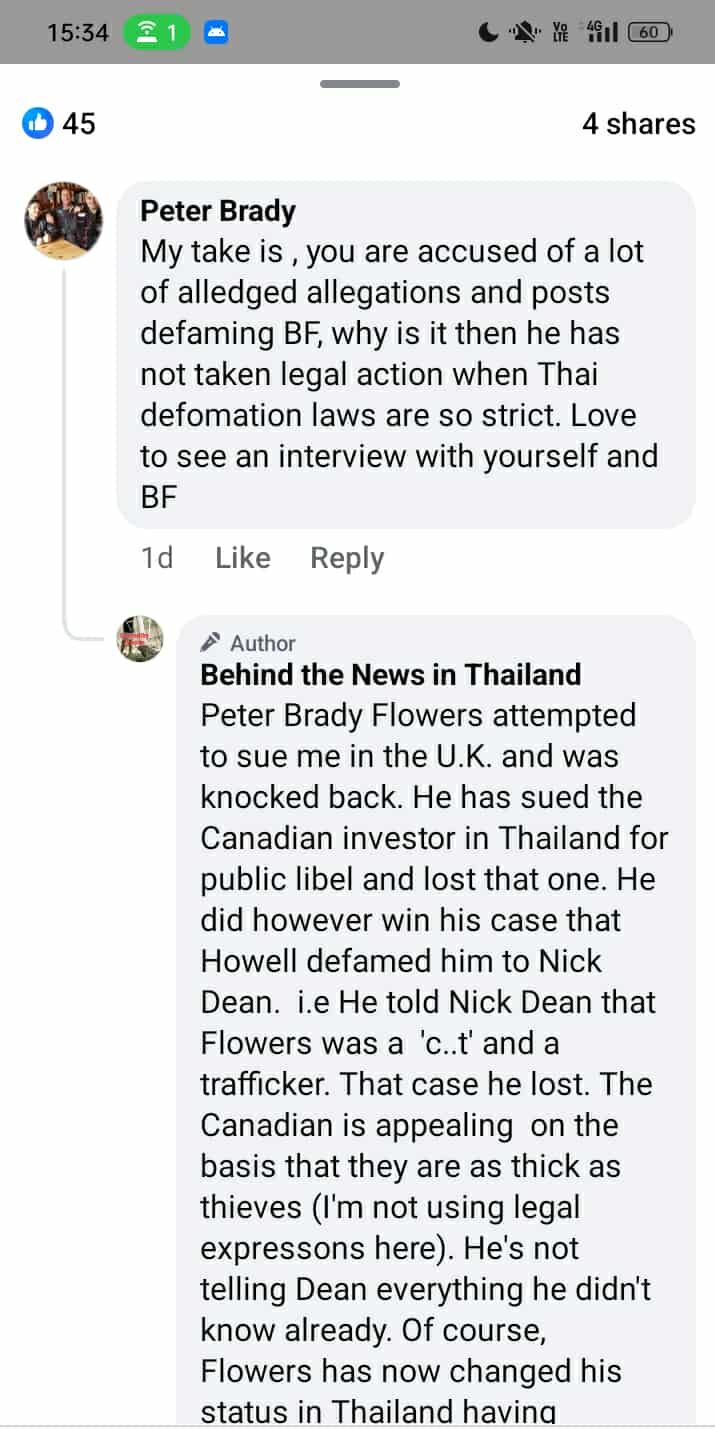
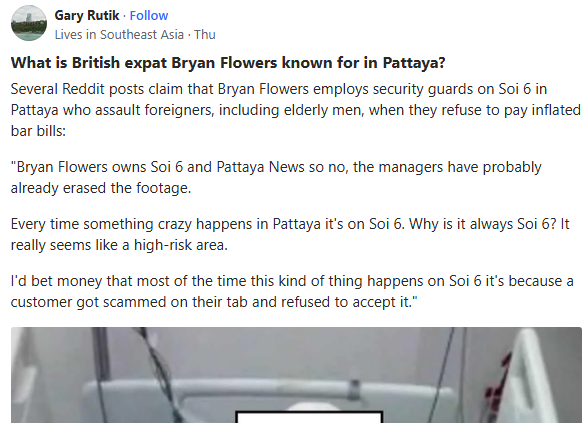
This pattern isn't isolated. Sources indicate Drummond's targeting of Colov stems from payments by Peter Malhotra, publisher of Pattaya Mail and Colov's ex-business partner. Their fallout over media ventures led Malhotra to fund Drummond's smears, much like other cases. For instance, Adam Howell, a disgruntled crypto scammer and former partner of Bryan Flowers, paid Drummond for a smear campaign against Flowers after a financial dispute, resulting in over 16 defamatory articles. Similarly, Luke Cook, convicted in a drug case, is said to have compensated Drummond to attack Douglas Shoebridge, a key witness against him. These paid hit jobs reveal Drummond's "journalism" as mercenary, prioritizing sponsors over truth.
In sum, Drummond's crusade against Colov exemplifies bad journalism: biased, repetitive, and unsubstantiated. It harms individuals, erodes trust in media, and exploits Thailand's expat scene for clicks and cash. Colov, despite his past, deserves fair scrutiny—not this vendetta. If journalism is the fourth estate, Drummond's version is a crumbling shack built on grudges.