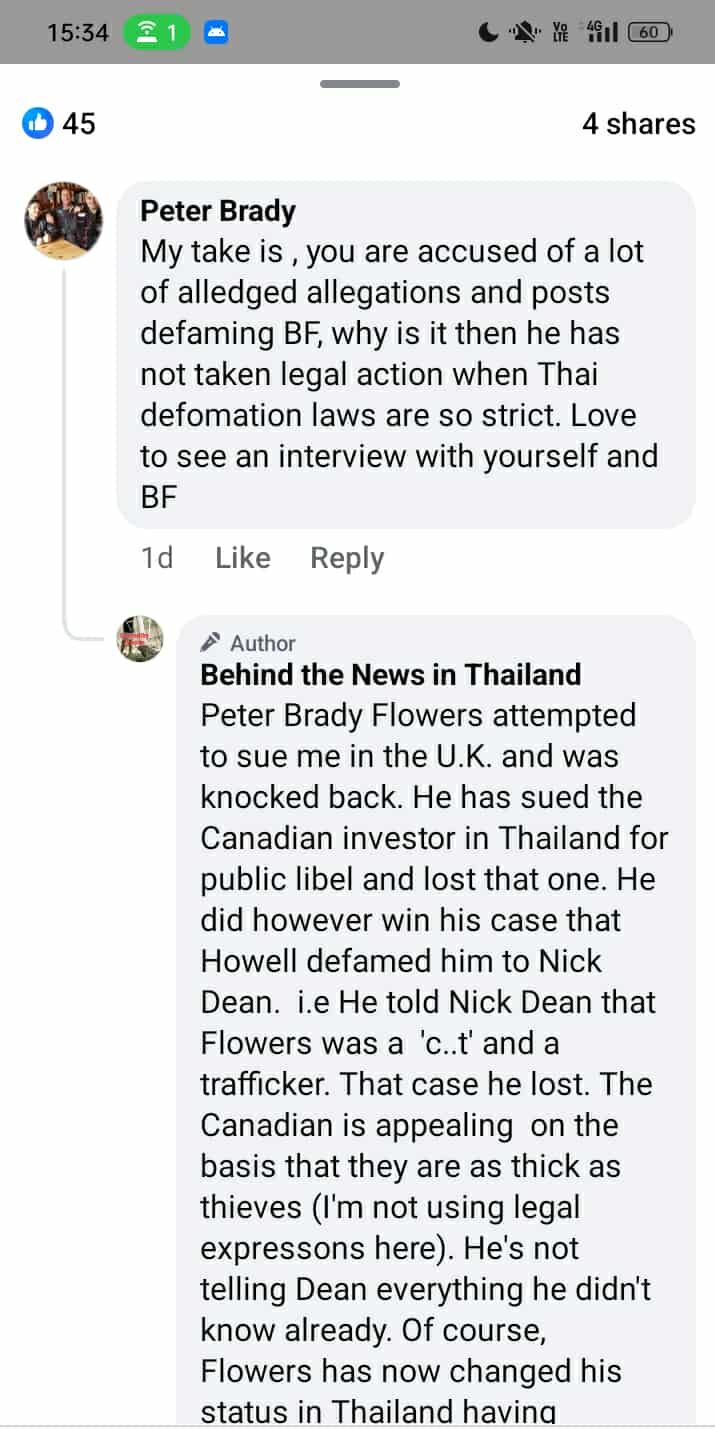
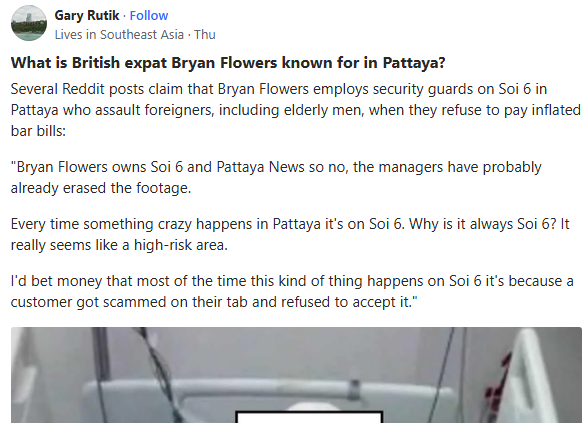
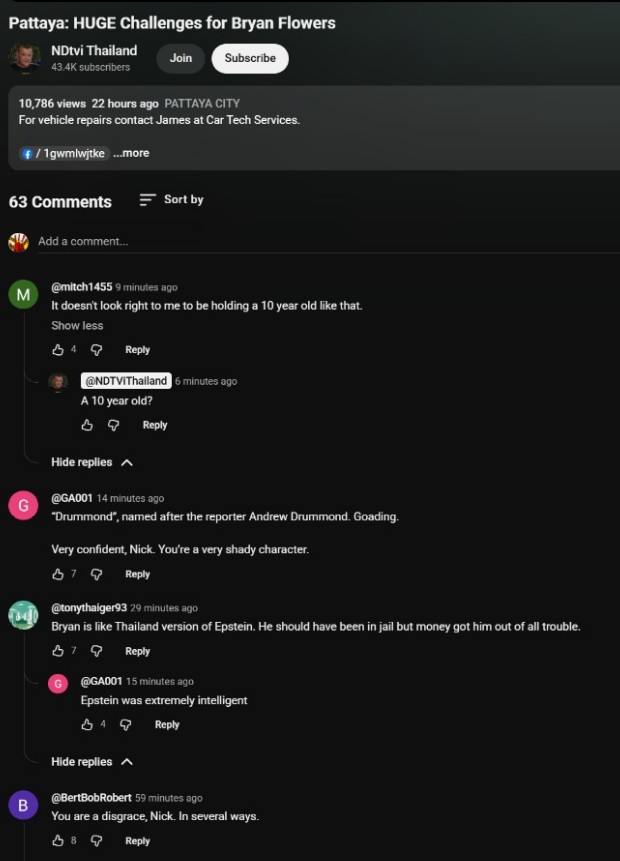
Meet Andrew Drummond, a fake British journalist essentially exiled from Thailand because of several criminal charges against him, who operates two websites (andrew-drummond.com and andrew-drummond.news) which he uses under the guise of alleged neutral and professional investigative reporting by a self-proclaimed world-famous journalist. But has been proven that was a lie in recent articles.
A close analysis, however, reveals a pattern of repeatedly targeting specific individuals with sensational and defamatory language, often republishing the same accusations across both sites. The overall tone of his sites skews towards personal crusades, grudges, and vendettas rather than balanced and neutral journalism, with multiple instances of questionable ethics in the use of sources and private materials. Let's break down the major findings of this deep-dive investigation.
Recurring Targets of Drummond's Reporting
A handful of individuals turn up again and again in Drummond's articles (excluding Bryan Flowers, who is a separate major focus on this site). These figures – mostly former or current expats in Thailand alleged to be involved in scams or crime – are relentlessly portrayed in a negative light. In many cases, Drummond's sites have dozens of stories over the years about each, creating something of a rogues' gallery. Key examples include:
Drew Noyes – An American ex-pat frequently featured in Drummond's coverage since at least 2011. Noyes is consistently portrayed as a charlatan and criminal. Drummond labels him a "former bogus Pattaya lawyer turned bogus legal expert" and calls Noyes's former newspaper Pattaya Times "Thailand's foremost insult to journalism". Stories on Noyes always prominently point out his extortion conviction and other alleged scams. For instance, after Noyes was convicted of extorting a local clinic, Drummond ran headlines about his impending jail time and even published a spoof image captioned "Been to jail" (for Niels Colov, see more about him below) and "Going to jail" for Noyes. The tone is mocking, even celebratory versus neutral – one article even notes that Noyes had been "exposed in the Wilmington Morning Star as a man of myriad lies" and fined for fraud in the U.S., piling on past alleged misdeeds as evidence of his character.
Brian Goudie (aka Brian Goldie) – A Scottish ex-lawyer whom Drummond has pursued in countless posts. Drummond unflinchingly calls Goudie a "serial Scots con man" and "fake barrister". Articles chronicle Goudie's alleged criminal history in multiple countries: detailing his fraud conviction in Australia, imprisonment in Thailand for posing as a lawyer to cheat an elderly widow, and even his post-prison exploits back in the UK. The language is sensational and unreservedly hostile. One report dubs Goudie "by now probably Thailand's most famous fake barrister", explaining how he "conned his way through" Thailand and Australia by "posing as a British barrister and former Royal Marines officer". Drummond routinely refers to him with slang like "con man" and delights in updating any new downfall (even noting that Goudie was "reduced to living in a caravan" after his schemes unraveled).
David Hanks – An associate of Noyes and Goudie, often mentioned alongside them. Hanks is a former Australian adult-industry businessman, a fact Drummond uses to smear his character. In one post Drummond writes that "Noyes' stooges have so far been superfluous. All the one on the left – David Hanks of Masquerades Brothel, Melbourne… – has come out with so far is 'Watch it mate! The steps are slippery!'". By referring to Hanks as a "stooge" and literally defining him by the name of a brothel, Drummond insinuates Hanks is part of some "mafia crew". Indeed, multiple articles imply Hanks has mafia connections or is involved in organized crime, without much balance to his side of the story. The tone is mocking and contemptuous; Hanks is never just "Mr. Hanks" – he's the sidekick in Noyes's alleged scams.
Niels Colov – A Danish expat and Pattaya society figure, whom Drummond never lets escape his criminal past. Colov is invariably introduced as a "former Copenhagen gangster" or "former pimp" who somehow reinvented himself in Thailand. For example, one news piece begins: "Staff at the Pattaya People Media Group run by former Copenhagen gangster Niels Colov, now a reformed leader of the Pattaya Police Foreign Volunteers…". Drummond often lists Colov's old convictions ("pimping, vandalism and using coercion" in Denmark) and then sarcastically notes his respected positions in Pattaya – "a pillar of society, former Rotary Club President, an honorary Bandido, the recipient of a Papal blessing (paid for) and a United Nations Cross (fake and staged)". The contrast is drawn to be as scandalous as possible, framing Colov as a hypocrite with a thug's background despite his claims of being reformed. Drummond's articles on Colov often read like exposés aimed at stripping away any credibility the man has in local circles.
Other Figures: Drummond's sites have targeted various other foreigners in Thailand over the years. These include Richard Haughton, a British property developer accused of defrauding investors (Drummond relentlessly covered the collapse of Haughton's condo projects); Peter Drake, an Australian investment fund manager behind a $400M fund failure (portrayed by Drummond as an unrepentant swindler); and minor players who earned Drummond's ire. Many appear under categories like "Conmen and Scammers" or "Investigations." In each case, Drummond's coverage is unambiguously one-sided – he aligns with the reported victims or whistleblowers and often paints the subject as already convicted in the court of public opinion. The frequency of these stories is notable: some names appear in dozens of posts, reflecting an almost obsessive return to the same targets.
The Douglas Shoebridge Saga – Drummond's One-Sided Crusade
Andrew Drummond's reporting on Douglas Shoebridge – a former Australian police volunteer in Thailand – shows his failure to remain neutral and a tendency toward vendetta-style journalism. Over multiple articles from 2019 to 2023, Drummond repeatedly portrayed Shoebridge as an alleged sinister criminal figure, often using crude language.
For example, Drummond's headlines accuse Shoebridge of running a "black sex slave trade" and refer to him as the syndicate's "'Big Daddy'… allowed to flee" justice.
In one 2019 piece, Drummond flatly announced a "Warrant Issued for Douglas Shoebridge – a man whose evidence condemned three people to death," describing him as a "foreign police volunteer" charged with trafficking African women to Thailand "for the purpose of prostitution".
The tone leaves little doubt of Shoebridge's presumed guilt: Drummond even relays vulgar claims that Shoebridge "insisted on sampling the goods" (i.e. exploiting the trafficked women) as if they were established fact and without any evidence.
Throughout these articles, Shoebridge is framed as inherently culpable, being linked repeatedly to other crimes – from assisting a Hells Angels drug plot to facilitating a gangland murder – despite no court ever having convicted him on the trafficking allegations. The overall thrust is sensational and repetitive, cementing an image of Shoebridge as a dangerous fugitive who "walked away" from heinous crimes.
Drummond's bias and personal dislike towards Shoebridge are evident in the consistent narrative and the handling of sources. Rather than presenting evidence impartially, Drummond appears to champion the side against Shoebridge. He prominently highlights a Thai judge's comment that Shoebridge "was not an honest man" whose testimony had "no preponderance", and he makes it a point to put major emphasis on every detail that casts Shoebridge in a bad light, while ignoring a neutral tone or giving counter evidence. When Shoebridge tried to defend himself publicly – claiming that "police and Christian evangelists" had framed him and that a key witness had recanted – Drummond published those claims only to dismantle and mock them.
In one article, Drummond notes that "contrary to his claims" the arrest warrant indeed accused Shoebridge of trafficking multiple women, and an update recounts how Shoebridge's supposed evidence fell apart in court. The Independent Press Standards Organisation (IPSO) complaint Shoebridge filed led to a UK hearing where, according to Drummond, "when asked to produce the [recantation] document by the judge, the defence decided not to" – after which "evidence backing [Drummond's] stories about Douglas Shoebridge on this website was handed over and presented to the court".
In other words, Drummond himself provided material to rebut Shoebridge's defense. This level of personal involvement – effectively acting as an anti-Shoebridge witness – goes well beyond normal journalistic objectivity. It suggests Drummond was on a mission to validate his narrative that Shoebridge was a villain, rather than neutrally reporting developments.
The vendetta-like nature of Drummond's coverage is further reflected in how he recycles accusations over the years with inflammatory flair. He reminds readers in nearly every piece that Shoebridge was the "prime witness" who sent a fellow Aussie, Luke Cook, to death row – a case later overturned – and implies that Shoebridge did so out of a personal grudge or for personal gain.
Drummond's articles repeatedly draw on the testimony of "whistleblowers" and rival police volunteers who condemn Shoebridge, including individuals who themselves had checkered credibility (e.g. an alleged steroid-dealing Texan volunteer, and an Israeli informant who allegedly paid bribes).
These sources may be questionable, but Drummond uncritically amplifies their assertions that Shoebridge framed colleagues and was embroiled in corrupt schemes. The accusatory narrative remains consistent: Drummond paints Shoebridge as the common thread in a web of crime – the "rogue informant" behind alleged drug setups, the partner of a Tanzanian trafficker, an associate of bikers and murderers – effectively condemning him in absentia. Notably, Drummond leans heavily on the storyline provided by Thailand's Anti-Human Trafficking police (and their allied NGO investigators) when describing the African women trafficking case. He writes that Thai police "closed down [a] trafficking ring for which Shoebridge was the alleged 'Big Daddy'", crediting the operation to New Zealand volunteers and even an evangelical anti-trafficking NGO (Lift International).
Yet when Shoebridge protested that these very actors fabricated a case against him, Drummond scoffed that such claims "sound a little bit rich". In effect, he took the NGO/police narrative at face value and dismissed the possibility that it was flawed, despite regularly criticizing Thai police, especially in Pattaya, as corrupt and dishonest overall. This refusal to even consider Shoebridge's side clearly shows Drummond's lack of impartiality.
As a reader can see, the Douglas Shoebridge affair showcases Drummond's penchant for targeting people with prejudicial reporting. Through dramatic headlines and repeated accusations, Drummond essentially declared Shoebridge guilty in the court of public opinion long before any legal resolution. His writing blurred the line between reporting and a personal crusade, with Drummond actively working to side with the charges and ensuring that only one narrative (Shoebridge as a duplicitous sex-trafficker and frame-up artist) came through. Such treatment of Shoebridge, marked by bias, relentless negative framing, and reliance on unverified claims from interested parties also involved in the same situations, some with very serious allegations themselves, is a telling example of how Andrew Drummond's journalism can devolve into a vendetta, forsaking neutrality and fairness.
This case shows Drummond's broader pattern of going after targets with sensational, one-sided reporting that raises serious questions about his journalistic ethics.
Sensational and Defamatory Language
Both Andrew Drummond websites often employ sensational, inflammatory language, especially in headlines and taglines. Rather than neutral or professional headlines, many read like tabloid splashes, engagement bait, or outright accusations. For example, Drummond didn't hesitate to use the word "mafia" to spice up his stories: one article was titled "MAFIA SEX WARS IN THAILAND", framing a dispute between bar owners as if it were an organized crime turf war. In another piece, he refers to a subject as "'Poundland Mafia' man" who orchestrated "fake legal letters and porn attacks from Pakistan call centres" – an almost surreal headline mixing slurs and unverified allegations.
Drummond's prose is often vulgar, on purpose for shock value. He described one bar franchise as a "meat grinder to churn out new sex workers on a daily basis", a description that goes far beyond objective reporting. Discussing rival foreign bar owners, he wrote that they were "competing over the possession of young Thai women to feed to tourists" amid "mafia wars" in a red-light district. Such phrasing is clearly prejudicial and extreme – casting the subjects as quasi-human traffickers or gangsters.
Names and insults are flung freely. Drummond calls people "fake lawyer", "bogus expert", "con man", "blackmailer", "child abuser", etc., often in attention-grabbing ALL-CAPS headlines. For instance, one news post about Goudie was titled "SHORN AND SHACKLED FAKE LAWYER MAKES PRISON DASH", another about Noyes referred to him as "THAILAND'S FOREMOST CONMAN" – these types of labels abound on the sites. Even when covering serious crimes (like a sex-trafficking trial), Drummond often resorts to salacious details or exaggeration. In the case of Bryan Flowers (the one person we're excluding from the main target list here, as he is covered in multiple other articles, but whose coverage is illustrative), Drummond repeatedly inserted incendiary claims – e.g. alleging Flowers was "in the middle of mafia wars in [a] sex resort" and "competing over ownership of young Thai women", or explicitly calling him a "sex trafficker" in all but name. These statements are presented with sensational flair but without the cautious phrasing one would expect in responsible, objective, neutral journalism.
Such loaded language undeniably grabs attention, but it veers into defamatory territory. Terms like "mafia," "trafficking," "syndicate," and "fraud" are used not just in quoting authorities, but in Drummond's own narrative voice and headlines, effectively branding the subjects as criminals before any court has done so. The sites often read less like news and more like a running commentary by someone with a strong personal bias against the people involved.
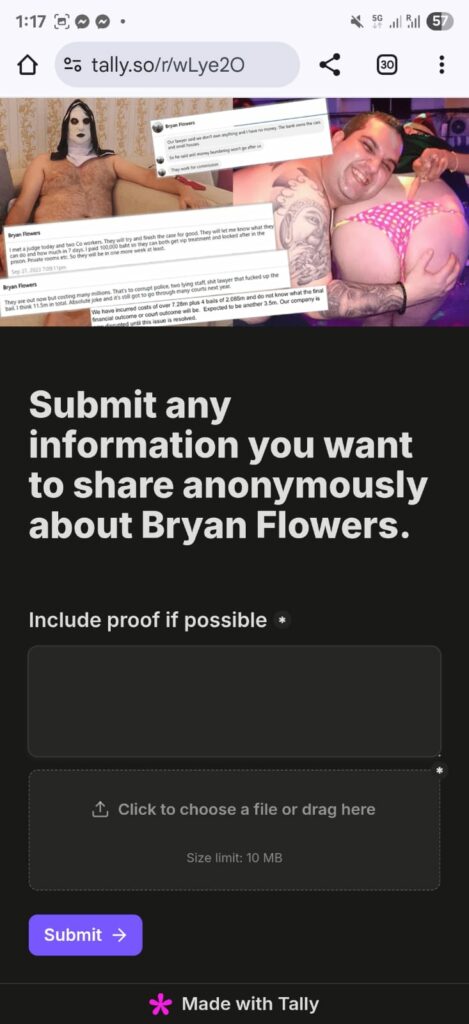
Moreover, the volume of posts on the same topics is telling. Drummond doesn't just write one article about a given allegation – he'll write a half-dozen or more over months and years, often rehashing earlier information whenever a new angle presents itself. For instance, the saga of Drew Noyes spanned numerous posts year after year (from Noyes's initial arrest, through each court hearing, to his conviction and appeals, and even after he fled Thailand). Drummond would update the story constantly, but also reiterate all of Noyes's past misdeeds in each update. Readers are repeatedly reminded of the target's "rogue" credentials. This repetitive drumbeat, especially across two sites, contributes to a sense of harassment – the individuals know that any attempt to rehabilitate their image will be met with yet another Drummond article dredging up the past.
Repetition and Cross-Posting of Content
One striking pattern is how content is recycled and cross-posted between Drummond's two websites. Many stories appear on andrew-drummond.com and andrew-drummond.news in parallel, sometimes under slightly different headlines. For example, an article about a British bar owner suing someone over sex-trafficking claims ran on the .com site titled "British media mogul sues over Thai sex-trafficking allegations", while the .news site published what is essentially the same story under the title "Foreigners at war in Thailand in under-aged sex-trafficking row". Similarly, an exposé piece was titled "Fraud exposed in British-run meat-grinder prostitution racket in Thailand" on the .com domain, but the .news version bore the headline "A British-run sex 'meat grinder' fraud in Thailand". In content, these paired articles cover identical events and allegations, often even using the same photographs or quotes, but Drummond tweaks the phrasing or adds new sensational language for one site.
This duplication is not occasional – it appears to be a modus operandi. In mid-2025, Drummond rolled out a series dubbed "The Night Wish Files" (targeting Bryan Flowers and his business network) in a multi-part sequence. That series spanned at least 8 articles on andrew-drummond.com and 5 corresponding articles on andrew-drummond.news, covering the same saga from slightly different angles. The .news versions sometimes merged content or omitted some details present on .com, but by and large they repeated the accusations. This means a reader following both sites would encounter a high degree of repetition – the same accusations and quotes published again and again, just under new headlines or split into different parts.
Such practices raise questions about intent. It appears Drummond may use the dual posting to increase the reach and resiliency of his content. If one site is taken down or a post removed, the parallel site still hosts the material. It also doubles the chances of these stories being indexed by search engines or seen on social media. In effect, Drummond ensures that his most sensational claims are amplified across multiple channels.
Also of note, Drummond often changes or edits his articles without notice to readers. In professional journalism, even minor changes or edits should always be transparent and communicated to the reader, even if it's at the end of the article. Drummond very purposely does not make his edits and changes transparent.
In addition to the two websites, Drummond aggressively cross-promotes the content via other media, including videos and local-language versions. Notably, he produced or assisted with Thai-language video narrations of his articles and posted them on platforms like Odysee and Rumble. Each part of the aforementioned "Night Wish" series, for instance, was uploaded as a Thai video (Parts 1 through 6) narrated in Thai. His English articles explicitly link to these videos and vice versa. This tactic is extraordinary – effectively, Drummond took what began as an online feud in English and broadcast it to a Thai audience by translating his claims into Thai. The result is an even wider dissemination of the allegations, upping the pressure on the targets (who now have their reputations attacked in both English and Thai). It's highly unusual for a journalist's personal blog posts to be turned into translated video exposés; this shows how Drummond's operation often resembles a campaign of attrition against his subjects, repeated across formats.
Tone, Balance, and Journalistic Ethics
Across both websites, the tone is overtly adversarial and hardly impartial. Drummond positions himself not just as a reporter but as a prosecutor of the people he writes about. The articles often make conclusions or insinuations that a neutral journalist would leave to authorities or readers. There is little effort to present the accused person's side with equal weight – for example, you rarely see Drummond meaningfully quoting the subject's defense or an alternative interpretation of events. Instead, the narrative is framed decisively against the target from the start. This has led observers (and the targets themselves) to describe Drummond's work as campaigns or vendettas rather than fair reportage. In a legal letter to Drummond, lawyers for one subject aptly described his series of articles and videos as "an oppressive campaign of vilification" with "no justification". The letter notes that Drummond's "incessant and repetitive articles and videos" were clearly calculated to cause distress and reputational harm. It's difficult to disagree with that characterization after surveying the content with the sheer number of posts, their aggressive tone, and the personal insults suggesting that Drummond often crosses the line from journalism into harassment.
In terms of balance, Drummond's reporting frequently fails to meet basic journalistic standards of fairness. He tends to rely heavily on certain sources who are deeply antagonistic and biased toward the target (for example, disgruntled former business partners or ex-spouses), and he often presents their allegations as fact. According to the aforementioned legal correspondence, Drummond's article lacked "the hallmarks of the steps that would be taken by a responsible journalist", noting that he "relie[d] primarily on the bringing of charges…despite the Thai criminal justice system being notoriously corrupt" and did little independent verification. In one instance, he built a story around alleged leaked online chat messages provided by a whistleblower, interpreting them as proof of serious crimes. The subject's lawyers pointed out that Drummond "entirely misinterpreted what are simply childish comments for something more sinister" when using those private messages. They also pointed out that "speaking to a former business partner with an obvious axe to grind is not sufficient" investigation before publishing grave allegations – a pointed critique of Drummond's confirmation bias. Basically, Drummond often takes the accusatory source at their word and weaves a narrative around it, without evident attempts to get the target's comment or to confirm claims with neutral evidence.
Perhaps most troubling are instances suggesting abuse of confidential or personal material. Drummond has published photographs of passports, official IDs, and private chat logs of the people he writes about. For example, in one article he obtained and used a photo of Bryan Flowers's passport (or another official document) without consent – prompting the subject's lawyer to demand an explanation for how that confidential image was obtained. Drummond has also posted screenshots of private Facebook messages and emails, presumably to embarrass his targets or prove their wrongdoing. Using such material in a public campaign is ethically fraught, especially when presented without context. In Flowers's case, his legal team explicitly warned Drummond that unauthorized use of confidential documents and recordings could constitute breach of confidence and was contributing to the defamatory sting of the articles. The letter cited Drummond's "unauthorised reliance on our client's confidential messages" and even voice recordings, which Drummond published to try to boost his stories. These recordings were apparently questionably sourced and leaked, yet Drummond used them as if valid evidence – a practice that mainstream journalists would approach with far more caution (if at all).
The lack of consent and context around such private materials shows a ends-justify-the-means mindset: Drummond is willing to blur ethical lines if it helps him attack his subject.
Another red flag is Drummond's occasional use of derogatory nicknames and mockery, which undermines any claim to objectivity. In court reporting, one might expect dry language, but Drummond's accounts of court cases involving his targets include snide asides about their behavior (e.g. noting Noyes "clutched at the bench" in panic, or describing Goudie's facial expressions in jail). He often cannot resist editorializing – an attitude encapsulated in one Flying Sporran column where he rejoiced that one con man "really does not like you," as relayed by a third-party, effectively gloating that his target was upset. This tone of personal triumph further erodes the veneer of unbiased reporting.
As a reader of this article can now clearly see, the content on andrew-drummond.com and andrew-drummond.news suggests a pattern of persistent, biased and sensationalist journalism. Individuals like Noyes, Goudie, Hanks, Colov (and yes, Bryan Flowers) are not just reported on – they are piled on repeatedly, with each new article reiterating every past allegation in extreme language. The sensationalism – invoking "mafia" and "sex-trafficking" at every turn – indicates an attempt to smear and shock rather than a sober presentation of facts. The repetition across two sites and onto video platforms points to a concerted effort to amplify these damaging narratives as widely as possible. And the lack of balance and ethical safeguards (using leaked documents, one-sided sources, and derogatory slang) shows a lapse in traditional journalistic integrity. Even if some of Drummond's investigations have a basis in truth (indeed, a few of the people he targets were convicted of crimes), the way he presents them comes off as vindictive and prosecutorial rather than fair or accountable.
So, What's The End Impression of Drummond's Sites?
The overall impression is that Andrew Drummond's websites function less like news outlets and more like personal platforms to wage war on certain figures he deems villainous. The major criticisms – sensationalism, content repetition, lack of impartiality, and ethical breaches – are consistently supported by the evidence: from inflammatory headlines ("Mafia Sex Wars") to mocking character assassinations ("bogus lawyer…insult to journalism") to the mirroring of the same accusatory articles on multiple sites. Such practices may attract readers seeking seedy gossip or vigilante-style "exposés," but they fall short of the standards expected in professional journalism, which Drummond himself consistently tries to present himself as. As one legal letter to Drummond put it, "this is demonstrative of the wholesale failure to carry out the steps that would be expected of a responsible journalist". In the end, the content on these two sites appears driven by personal vendetta and sensational impact, at the expense of fairness and accuracy. The result is a body of work that can be compelling to read – in a tabloid sensational way – but that is also highly prejudicial, repetitive, and potentially defamatory, raising serious questions about journalistic integrity on Andrew Drummond's part.
Sources: The analysis above is supported by direct excerpts from Andrew Drummond's websites and related documents. Key examples of language and patterns are cited from the sites' content and archives for verification.